NEXCYBER ZA20-U09K6BF-F001 Level Charger Wifi Plug Play Nema 684514188975 App/plug 40AMP 240V 14-50P 25FT
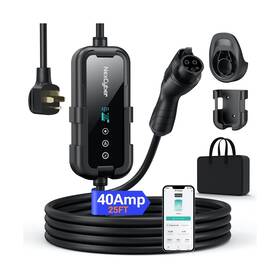
( Brand: Nexcyber ), ( Manufacturer Part Number: ZA20-U09K6BF-F001 ), ( Part Type: Level Charger Plug ), ( UPC: 684514188975 ), ( Size: 40a J1772 Connector )
Review NEXCYBER Level Ev Charger 40amp Wifi App/plug-play 240v Nema Plug 25ft
The **NexCyber ZA20-U09K6BF-F001 Level 2 EV Charger** is a cutting-edge, high-performance electric vehicle (EV) charging station designed to deliver rapid and reliable power to modern plug-in hybrids and fully electric vehicles. This **40-amp, 240V charger** combines seamless connectivity with robust functionality, making it an ideal solution for home garages, apartment complexes, or commercial charging stations where convenience and efficiency are paramount. With a **NEMA 14-50P plug**, it ensures compatibility with standard household electrical setups while providing the high amperage required for Level 2 charging ideal for reducing charging times from hours to mere minutes. The included **25-foot heavy-duty charging cable** offers flexibility, allowing users to charge vehicles parked at a distance from the outlet without sacrificing power delivery.
What truly sets this charger apart is its **Wi-Fi and app-enabled smart features**, which transform a simple charging session into a fully integrated, user-friendly experience. Through the accompanying mobile application, drivers can monitor charging progress in real time, set schedules to optimize energy usage during off-peak hours, and receive alerts for maintenance or connectivity issues. The **plug-and-play design** simplifies installation, as it requires minimal setup just connect the NEMA plug to a dedicated 240V circuit (preferably with a 50-amp breaker) and pair the charger with the app via Wi-Fi for instant operation. This eliminates the need for complex wiring or professional electrician assistance, making it accessible for both tech-savvy users and those new to EV charging.
Beyond its smart capabilities, the ZA20-U09K6BF-F001 is built with durability and safety in mind. Its robust construction ensures resistance to environmental factors such as moisture and dust, while built-in protections including overcurrent, overvoltage, and ground fault interruption guarantee reliable operation without compromising electrical safety. The charger s **240V output** delivers a consistent power supply, accelerating charging speeds significantly compared to standard 120V outlets, making it perfect for owners of Tesla, Chevrolet Bolt, Ford Mustang Mach-E, Nissan Leaf, and other EVs that require higher amperage for efficient charging. Whether used at home, in a workplace, or as part of a shared charging network, this charger bridges the gap between convenience and performance, ensuring that EV owners can charge their vehicles quickly, securely, and with minimal hassle.
The **NexCyber ZA20-U09K6BF-F001** is a 40-amp, 240V EV charger with Wi-Fi connectivity, app control, and plug-and-play functionality. Below is a detailed breakdown of its pros and cons, followed by a conclusion and recommendation.
---
### **Pros**
1. **High Power Output (40 Amps)**
- Faster charging compared to lower-wattage chargers, reducing charging time for electric vehicles (EVs) with compatible hardware. This is particularly useful for vehicles that support Level 2 charging at higher amperages.
2. **Wi-Fi and App Control**
- Remote monitoring and management via a smartphone app allows users to start/stop charging, set schedules, and receive alerts. This adds convenience, especially for those who want to manage charging remotely or integrate it with smart home systems.
3. **Plug-and-Play Installation**
- Designed for ease of installation, the charger is intended to be plug-and-play, meaning it can often be connected directly to a compatible 240V outlet without requiring complex wiring. This reduces installation costs and time, though professional installation may still be recommended for safety.
4. **Compatibility with Nema 14-50P Outlet**
- The Nema 14-50P plug is a standard 240V outlet commonly found in homes and garages in North America. This makes it easier to install in existing setups without needing specialized electrical work.
5. **25-Foot Cable Length**
- A longer cable provides flexibility in placement, allowing the charger to be positioned farther from the outlet or EV parking spot, which can be useful in tight spaces or when charging multiple vehicles.
6. **Safety Features**
- Likely includes standard safety features such as ground fault circuit interrupter (GFCI) protection, overcurrent protection, and possibly tamper-resistant design elements to prevent misuse.
7. **Future-Proofing**
- Wi-Fi and app connectivity suggest compatibility with emerging smart grid technologies, energy management systems, and potential integration with renewable energy sources (e.g., solar panels).
8. **Portability (Relative to Hardwired Chargers)**
- Unlike hardwired EV chargers, this model can be unplugged and moved to different locations if needed, offering more flexibility for renters or those who may change their charging setup.
---
### **Cons**
1. **Dependence on Existing Electrical Infrastructure**
- While it claims plug-and-play functionality, the charger may still require a dedicated 240V circuit with sufficient capacity (likely 50-amp or higher) to handle 40 amps safely. If the home s electrical panel lacks this, additional wiring or breaker upgrades may be necessary, negating the plug-and-play benefit.
2. **Potential for Higher Upfront Cost**
- Compared to basic Level 2 chargers without smart features, this model may be more expensive. The added Wi-Fi, app control, and higher amperage could drive up the price, though this is often justified by the convenience and speed.
3. **Installation Challenges**
- Even if the charger is plug-and-play, the outlet it connects to must be properly installed and grounded. Improper installation can pose fire or electrical hazards. Professional installation is highly recommended to ensure safety and compliance with local electrical codes.
4. **Compatibility with EV Hardware**
- Not all EVs support 40-amp charging. Some vehicles may have lower maximum charging rates (e.g., 32 amps or less), which could limit the charger s effectiveness. Users should verify their EV s charging capabilities before purchasing.
5. **Wi-Fi and App Reliability**
- The charger s smart features depend on a stable Wi-Fi connection. Poor network coverage or frequent disconnections could disrupt remote control or monitoring. Additionally, app updates or technical issues with the manufacturer s software could lead to downtime.
6. **Limited Durability or Build Quality (Potential Issue)**
- Some plug-and-play chargers, especially budget-friendly ones, may have lower-quality materials or construction. Exposure to outdoor elements (if installed in a garage or driveway) could lead to wear and tear over time. Check reviews for feedback on durability.
7. **Dependence on Manufacturer Support**
- Smart chargers require ongoing software support and customer service. If the manufacturer has poor customer service or discontinues the product, users may face difficulties with updates, troubleshooting, or replacements.
8. **Potential for Overheating**
- Higher amperage chargers can generate more heat, especially if installed in enclosed or poorly ventilated spaces. Overheating could lead to reduced lifespan or safety risks if not managed properly.
9. **Limited Customization or Advanced Features**
- Compared to higher-end smart chargers, this model may lack advanced features such as dynamic load balancing, vehicle-to-grid (V2G) capabilities, or detailed energy usage analytics. Users seeking these features may need to invest in a more premium charger.
10. **Regulatory or Insurance Considerations**
- Some homeowners insurance policies may require professional installation of EV chargers for coverage. Additionally, local building codes or electrical regulations may impose restrictions on plug-and-play installations, requiring permits or inspections.
---
### **Conclusion**
The **NexCyber ZA20-U09K6BF-F001** is a solid choice for users who prioritize **speed, convenience, and smart features** in their EV charging setup. Its 40-amp output ensures faster charging, while Wi-Fi and app control add a layer of modern functionality. The plug-and-play design and compatibility with standard Nema 14-50P outlets make it accessible for DIY enthusiasts, though professional installation is strongly advised to avoid safety risks.
However, the charger s effectiveness depends heavily on the user s **electrical infrastructure, EV compatibility, and Wi-Fi reliability**. If the home lacks a suitable 240V circuit or the EV cannot utilize 40 amps, the charger s advantages may be diminished. Additionally, the smart features introduce potential points of failure (e.g., app glitches, network issues) that could frustrate users.
For those who need a **fast, smart, and relatively easy-to-install** charger and have verified their electrical setup and EV compatibility, this is a viable option. However, users should weigh the convenience against the potential costs of professional installation or upgrades to their electrical system.
---
### **Recommendation**
**Buy the NexCyber ZA20-U09K6BF-F001 if:**- You have a **dedicated 240V circuit** (preferably 50-amp or higher) and a compatible Nema 14-50P outlet.
- Your EV supports **40-amp charging** (check the owner s manual).
- You value **remote monitoring, scheduling, and app control** for your charging routine.
- You prefer a **plug-and-play solution** and are comfortable with basic electrical connections (or are willing to hire a professional for installation).
- You want a **balance of speed and smart features** without the complexity of hardwired installations.
**Avoid the NexCyber ZA20-U09K6BF-F001 if:**- Your home lacks a suitable 240V circuit, as you may need to invest in electrical upgrades (which could cost hundreds of dollars).
- Your EV cannot utilize 40 amps, making the charger s speed irrelevant.
- You prioritize **durability and long-term reliability** over smart features and may prefer a more established brand with better customer support.
- You are uncomfortable with any level of DIY electrical work, as improper installation poses serious safety risks.
**Alternatives to Consider:**- For **simplicity and reliability**, a **hardwired Level 2 charger** (e.g., JuiceBox, ChargePoint) may be safer and more future-proof, though it requires professional installation.
- For **budget-conscious buyers**, a **basic plug-and-play charger** (e.g., 32-amp models) may suffice if your EV doesn t need faster charging.
- For **advanced smart features**, consider higher-end chargers like **Tesla Wall Connector, ChargePoint Home Flex, or JuiceBox Smart**, which offer more customization and integration options.
**Final Verdict:**The NexCyber ZA20-U09K6BF-F001 is a **good mid-range option** for users who meet its prerequisites and want a blend of speed, smart functionality, and ease of installation. However, it is not a "set-and-forget" solution it requires careful planning and potentially professional involvement to ensure safe and effective operation. Always verify compatibility with your EV and electrical setup before purchasing.
Details:
Brand: NexCyber. Features: Up to 8X Faster Charging Speed via the NEMA 14-50 plug 40 amp: Provides up 38 miles/hour charging speed amp. Use the 5-15P Adapter: You can do factory reset if doesn't charging.
Specification Met: ETL, FCC. The RV Adapter doesn't work for EV chargers, please choose the adapter. Smart WIFI APP, You can Set the Charging Period: By you tirelessly check charging cost, history, fully-charged notification, track status, during off-peak period, etc. Color: Black.
Plug-play Mode The Default Setting, Smart Touch Screen, No APP Needed: Clearly show the charging amperage, speed, input voltage , delay time, etc. Manufacturer: NexCyber. Level 2 EV Charger 40Amp with WiFi APP/Plug-Play, 240V NEMA 14-50P Plug, 25FT Cable ETL Certified, Portable Electric Vehicle Charging Stations EVSE J1772 Connector 40A j1772 Connector. It will become slow level 1 ev charging and some cars may drop to 12A, the max rate is 1.32-1.8kW 110V 12A-120V 15A.
part #: za20u09k6bff001 prices
- $145.00-$226.00
specifications doorbellsdo:
- brand: Nexcyber
- mpn: Za20-u09k6bf-f001
- part type: Level Charger Plug
- upc: 684514188975
- size: 40a J1772 Connector
offer doorbellsdo:
- availability: In Stock
- options: Ship-to-home
- quantity: 3
- sold: 0
- started: March 29, 2026
returns doorbellsdo:
- policy: Returns Accepted
- paid by: Seller
- time: 30 Days
- method: Money back
general doorbellsdo:
- condition: New
- Building Hardware > doors Door Hardware > Doorbells
seller doorbellsdo:
- rating: 99.3%
- # reviews: 31852
- city: US
payments doorbellsdo:
- other
- credit card: Discover
- wallet: Apple-pay
shipping doorbellsdo:
- type: Fixed
- service: Standard
- class: Standard
- cost: $0.00
- transit: 4-9 Days
Nexcyber ZA20-U09K6BF-F001 Is Similar To:
- Nexcyber 684514188968 Level 2 Ev Charger 32amp With Wifi App plug-play 240v Nema 14-50p Plug 25ft Ca (84.2% similar) Equipped with J1772 connector for all north America J1772 eves/pervs. The RV adapter doesn't work for ev chargers, please choose the adapter. Plug-play mode the default setting, smart touch screen, no app needed: clearly show the charging amperage, speed, input voltage , delay time, etc. It will ...(May 23rd, 2026)